
Dealing with swollen gum tissue around a tooth that hasn't fully broken through? Dentist Open Now connects you with a specialist in Aviston, IL who treats this specific issue every week, not occasionally.
Call the number below and a scheduling coordinator finds you the next available specialist.
+1-866-227-2801 Call Now
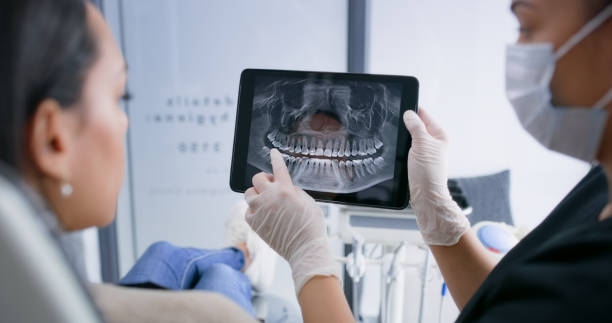
Wisdom teeth, the third set of molars, often don't have enough room to erupt properly, which is why so many end up impacted — angled sideways, partially emerged, or trapped entirely beneath the gum. Imaging beforehand shows exactly how the tooth is oriented, which determines whether it's a straightforward removal or a more involved surgical extraction.
{Not every wisdom tooth needs to come out — some erupt fully and function normally — but impacted or partially erupted ones are frequently linked to infection, crowding, and cyst formation if left alone.|The decision to remove usually comes down to whether the tooth is causing or likely to cause problems: infection risk, crowding of nearby teeth, or a cyst forming around an impacted tooth.} Because multiple teeth are frequently removed in one visit, sedation beyond local anesthesia is commonly offered and often preferred by patients.
Removal tends to be more involved the longer it's put off, since fully formed roots and denser bone make extraction more complex with age. Catching a problem tooth before it causes pain is usually easier on both the timeline and the recovery.
Full-mouth imaging shows exact tooth angle and proximity to nerves before surgery is planned.
Multiple sedation levels are available depending on how many teeth are removed and patient anxiety.
Complex cases are routed to a surgical specialist rather than attempted by general referral.
Most patients have all four wisdom teeth removed in a single surgical visit.
Whatever the specifics of your case, the specialist you reach through us has handled it before.
Removes teeth trapped fully or partially beneath the gum or angled against neighboring molars.
For teeth that have broken through but are still recommended for removal due to crowding or decay risk.
Removes all four wisdom teeth in one sedated appointment to avoid multiple separate recoveries.
Removes both the tooth and any associated cyst tissue in the same procedure.

Deeper sedation for patients with anxiety or complex, multi-tooth impaction cases.
A scheduled check-in after surgery ensures the extraction sites are healing as expected.
A coordinator answers and asks a few quick questions about your specific case and how soon you need care.
We match you with a nearby specialist experienced in this exact procedure and check real-time openings.
The specialist examines your case, often with same-visit X-rays, and gives you a cost estimate before starting anything.
You leave with the issue addressed and a plan for any next steps already scheduled.
"Explained every step before doing anything. First time a dental visit didn't feel rushed."
"Got in faster than I expected for something this specific. Staff were sharp and direct."
"Price they quoted on the phone matched the invoice exactly. No surprise charges."
Not always — fully erupted, properly positioned teeth without decay risk can sometimes stay.
Most patients recover within three to five days, with full healing over a couple of weeks.
Sedation options range from nitrous oxide to IV sedation depending on case complexity and preference.
A panoramic X-ray shows tooth position and confirms whether impaction is present before any decision is made.
Yes, erupting or shifting wisdom teeth can push against neighboring molars over time.
Cost depends on impaction severity and how many teeth are removed, quoted before surgery.
Our coverage spans Aviston and its surrounding area, matching you with the closest available specialist.
Licensed to practice in IL, credential-checked before joining the network.
A short phone call is all it takes to get this on the calendar this week.
Call +1-866-227-2801 Now